
Sewage Treatment Plant Maintenance: Checklist & Tips
A ready-to-use checklist that keeps your sewage treatment plant compliant, odour-free and running at low cost.
Quick Answer
Good STP maintenance follows a fixed routine. Daily: check screens, blowers, pumps, dissolved oxygen, pH, sludge settling (SV30) and treated water clarity. Weekly: rotate standby equipment, backwash filters and clean diffuser headers. Monthly: lab-test treated water, waste and dewater sludge to target, and service pumps and blowers. Yearly: drain and inspect tanks, renew consent and calibrate instruments.
On This Page
- Why STP Maintenance Matters
- Daily STP Maintenance Checklist
- Weekly Tasks
- Monthly Tasks
- Quarterly and Yearly Tasks
- Key Parameters to Monitor
- Quick STP Troubleshooting Guide
- Pump Maintenance in an STP
- In-House Team or AMC Contractor?
- How to Keep an STP Maintenance Logbook
- Critical Spares to Keep On Site
- Seasonal STP Maintenance Tips
- Safety Rules for STP Operators
- KPIs to Review Every Month
- Frequently Asked Questions
An STP can be well designed and well built and still fail within a year if nobody looks after it. Regular STP maintenance is what keeps treated water within norms, stops odour complaints and avoids expensive emergency repairs. Most problems in sewage treatment plants are not sudden. They build up quietly from small things that were skipped.
This guide gives you a practical sewage treatment plant maintenance checklist, the parameters to track, quick troubleshooting tips and advice on keeping pumps and blowers in good shape.
Why STP Maintenance Matters
Compliance
Pollution control boards can issue notices or penalties if treated water exceeds limits for BOD, TSS or coliforms.
Healthy Biology
The bacteria that treat sewage need steady oxygen, food and sludge age. Neglect quickly upsets them.
Lower Costs
Planned maintenance is far cheaper than breakdowns, emergency call-outs and replacing damaged equipment.
No Odour
Most STP smells come from low aeration and old sludge, both of which routine checks prevent.
Daily STP Maintenance Checklist
Every day:
- Clean bar screens and remove screenings; check the grit chamber
- Check that blowers are running, with normal sound, temperature and pressure
- Check air distribution in the aeration tank: even bubbling, no dead zones
- Measure dissolved oxygen in the aeration tank (typically 1.5–2.0 mg/L)
- Measure pH of inlet and treated water
- Do the 30-minute settling test (SV30) on aeration tank sample
- Check all pumps for leaks, noise, vibration and correct flow
- Check chlorine or hypochlorite dosing and residual chlorine in treated water
- Look at treated water clarity, colour and smell
- Record flow meter readings, running hours and observations in the logbook
Weekly Tasks
Every week:
- Switch over working and standby pumps and blowers
- Backwash pressure sand and activated carbon filters (or as pressure drop requires)
- Clean tube settler surfaces and remove floating scum
- Check MBBR media movement and retention screens
- Check chemical stock levels and dosing pump calibration
- Check blower belts, oil level and air filters
- Waste excess sludge to the holding tank based on SV30 and MLSS
Monthly Tasks
Every month:
- Send treated water samples to a lab for BOD, COD, TSS, pH and faecal coliform
- Measure MLSS and calculate sludge volume index (SVI)
- Dewater sludge in the filter press or screw press and dispose of cake
- Inspect pump wear parts: stators, rotors, seals and joints
- Grease bearings and check motor insulation as per OEM schedule
- Test float switches, level sensors and alarms
- Check electrical panels for loose connections and overheating
Quarterly and Yearly Tasks
- Drain and clean the equalization tank and sludge tanks to remove settled grit
- Inspect and clean or replace air diffusers
- Replace filter media (sand and activated carbon) when exhausted
- Overhaul blowers and major pumps as per manufacturer guidelines
- Calibrate flow meters, DO and pH instruments
- Check civil structures for cracks, leaks and corrosion
- Renew pollution control board consent and update records
- Train operators and review safety procedures, including confined-space entry
Key Parameters to Monitor
Tracking a few numbers tells you how healthy the biology is long before problems show up in the treated water.
| Parameter | Where | Typical Target |
|---|---|---|
| Dissolved oxygen (DO) | Aeration tank | About 1.5–2.0 mg/L |
| pH | Inlet and outlet | About 6.5–8.5 |
| SV30 | Aeration tank | Trend-based; compare with your plant’s normal value |
| MLSS | Aeration tank (ASP / extended aeration) | About 2,500–4,000 mg/L, per design |
| Residual chlorine | Treated water | As per reuse requirement |
| BOD, TSS, faecal coliform | Treated water | Within consent limits (see CPCB STP norms) |
Quick STP Troubleshooting Guide
| Symptom | Possible Cause | Action |
|---|---|---|
| Rotten egg smell | Low DO, septic sludge | Check blowers and diffusers, increase aeration, remove old sludge |
| White foam | Young sludge, detergents | Reduce sludge wasting, check load |
| Brown, thick foam | Old sludge, filamentous bacteria | Increase sludge wasting, check oil and grease |
| Sludge floating in clarifier | Denitrification, sludge held too long | Increase sludge return and wasting rates |
| Turbid treated water | Poor settling, overload, filter due for backwash | Check SV30, backwash filters, check inflow |
| Pump losing flow | Worn stator, blockage, air lock | Inspect wear parts, clear suction, check valves |
Pump Maintenance in an STP
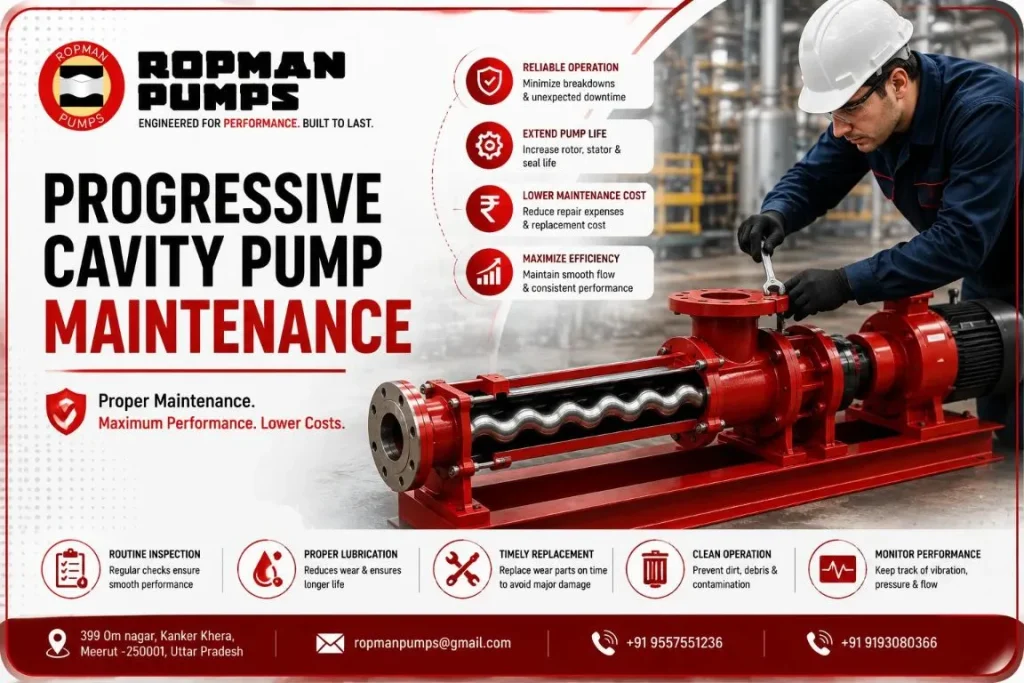
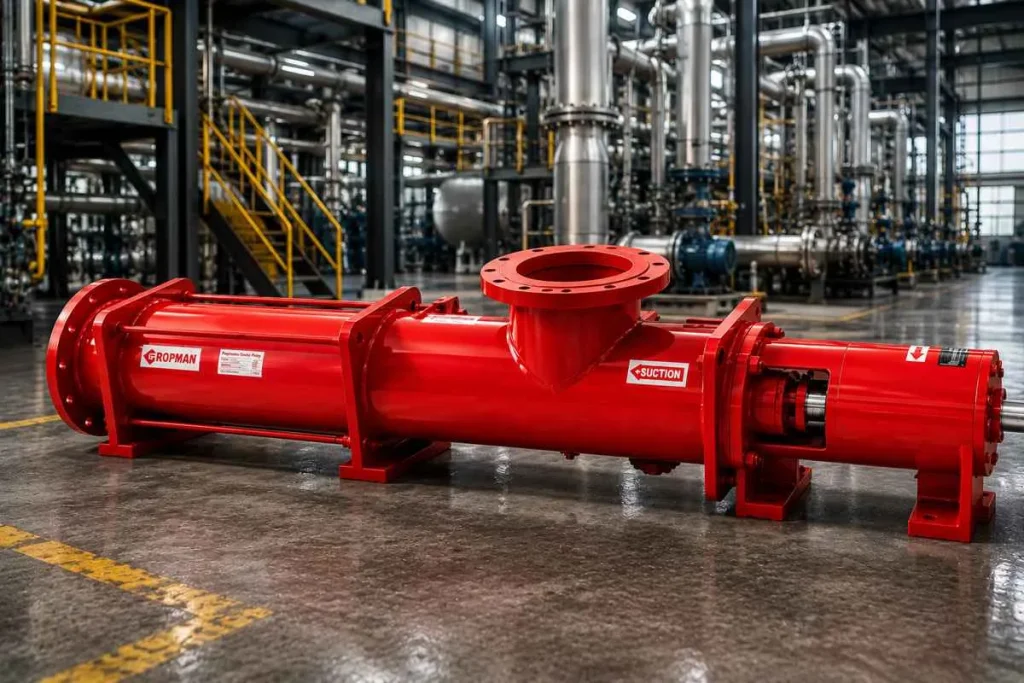
Pumps run around the clock in a sewage treatment plant, and sludge pumps face the hardest duty. A few habits keep them reliable:
- Never run dry. A progressive cavity pump stator can be damaged in minutes without liquid. Fit dry-run protection.
- Watch discharge pressure. Rising pressure often means a blocked line or closed valve; fit a pressure relief or pressure switch.
- Track flow against speed. If a pump delivers less at the same speed, the rotor and stator may be wearing.
- Keep matched spares. Stators, rotors, seals and joints from the original manufacturer fit correctly and last longer.
- Calibrate dosing pumps. Under-dosing chlorine fails norms; over-dosing wastes money and harms reuse.
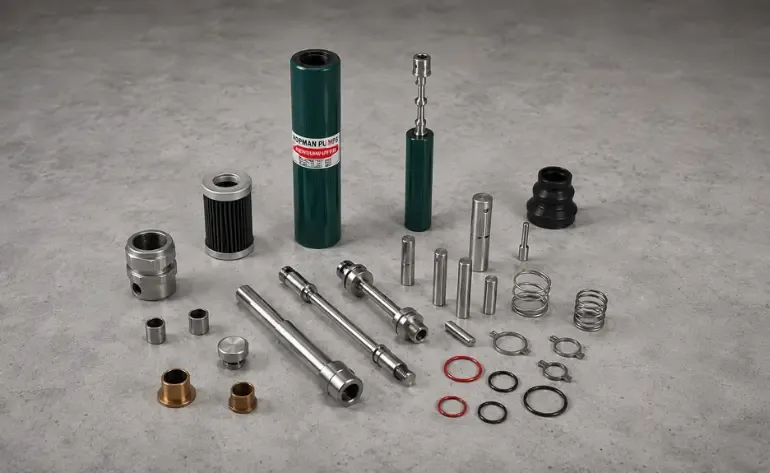
For a deeper look at pump upkeep, read our guide on reducing progressive cavity pump maintenance cost and our article on PC pump spare parts. Ropman supplies genuine spare parts for PC pumps, with rotors and stators made in-house in Meerut.
The best STP maintenance programme is the one that is written down, followed every day, and recorded in a logbook.
In-House Team or AMC Contractor?
Many housing societies and commercial buildings hand STP operation to an annual maintenance contract (AMC) provider. This works well when the contract clearly defines daily duties, testing frequency, spares responsibility, response time and penalties for non-compliance. Whoever runs the plant, the owner remains responsible for compliance, so review the logbook and lab reports every month.
For more on running a residential plant, see our STP plant for apartments guide. To understand how maintenance affects total cost, see our sewage treatment plant cost guide, or the general background on activated sludge.
How to Keep an STP Maintenance Logbook
A logbook turns STP maintenance from guesswork into a routine you can prove. It also helps you spot trends, such as a slowly falling DO or a pump that needs more and more running hours to move the same flow. A simple daily log can include:
| Entry | Example |
|---|---|
| Date, shift and operator name | 19 Oct, morning, R. Kumar |
| Inlet and outlet flow meter readings | Inlet 48.2 m³, outlet 46.9 m³ |
| Blower and pump running hours | Blower A 22 h, transfer pump B 14 h |
| DO in aeration tank | 1.8 mg/L |
| pH inlet / outlet | 7.4 / 7.2 |
| SV30 | Recorded value and observation |
| Residual chlorine in treated water | Recorded value |
| Sludge wasted / dewatered | Hours of pumping or batches pressed |
| Chemicals used | Hypochlorite and polymer quantities |
| Observations and faults | Screen cleaned twice; slight foam in aeration tank |
Keep the logbook in the plant room, and review it weekly. A digital sheet or app works too, as long as it is filled in every shift.
Critical Spares to Keep On Site
Downtime in an STP is rarely caused by a lack of skill. It is usually caused by waiting for a part. Keeping a small stock of critical spares is one of the cheapest forms of insurance.
Blowers
- V-belts
- Air filter elements
- Oil and grease
- Pressure relief valve
Sludge Pumps
- Stator and rotor set
- Mechanical seal or gland packing
- Coupling rod and joint pins
- Dry-run sensor
Dosing Pumps
- Diaphragms
- Suction and discharge valves
- Injection and foot valves
- Tubing
General
- Diffuser membranes
- Fuses, contactors and relays
- Float switches
- Gaskets and common fittings
Buy pump wear parts from the original manufacturer wherever possible. Mismatched stators and rotors may fit, but they often wear faster and reduce pump performance.
Seasonal STP Maintenance Tips
Monsoon
Stormwater entering sewer lines can flood the plant and wash out the bacteria. Check that rainwater pipes are not connected to the sewer, keep the equalization tank level under control and protect blowers and panels from water entry. After heavy rain, monitor SV30 and DO closely as the biology recovers.
Summer
Higher temperatures speed up biological activity but lower oxygen solubility, so DO can drop. Watch blower temperatures and keep the blower room ventilated. Water demand rises, so treated water reuse is especially valuable.
Winter
In colder regions, biological activity slows. Allow for slightly longer treatment, avoid excessive sludge wasting and check that diffusers are not clogging.
Festivals and Holidays
Occupancy can drop sharply during long holidays and then surge on return. Avoid overwasting sludge during low-load periods so the plant can handle the return of normal flow.
Safety Rules for STP Operators
- Never enter a tank or sump alone. Sewage gases such as hydrogen sulphide can be fatal in confined spaces. Test the air, ventilate and use a harness with a standby person outside.
- Wear protective equipment: gloves, gumboots, goggles and masks when handling sludge and chemicals.
- Handle chemicals carefully: store hypochlorite, acids and polymer separately with clear labels.
- Lock out equipment before opening pumps, blowers or panels.
- Keep handrails and covers in place on all open tanks.
- Get vaccinated as advised by a doctor for those regularly handling sewage.
- Keep a first-aid kit and emergency numbers in the plant room.
KPIs to Review Every Month
Owners and RWAs do not need to understand every detail of STP maintenance, but a few numbers tell them whether the plant is well run.
Monthly STP review:
- Treated water lab results against consent limits
- Volume of treated water reused versus total treated
- Electricity consumption per cubic metre treated
- Chemical consumption trend
- Sludge removed and disposed of
- Number of breakdowns and hours of downtime
- Spares used and reordered
- Complaints about odour or noise
Tracking these KPIs month by month makes it easy to see whether STP maintenance is improving or slipping, and to hold an AMC contractor accountable. For the effect of good operation on long-term budgets, see our sewage treatment plant cost guide.
Frequently Asked Questions
What are the daily STP maintenance tasks?
How often should STP sludge be removed?
Why does my STP smell bad?
How often should STP water be tested?
How do I maintain sludge pumps in an STP?
What should an STP logbook contain?
Which spares should be kept for STP maintenance?
Is it safe to enter an STP tank for cleaning?
Keep Your STP Pumps Running
Ropman supplies progressive cavity pumps, dosing pumps and genuine spares with fast delivery from Meerut. Tell us your pump model or duty for a quote.
Request a Quote