
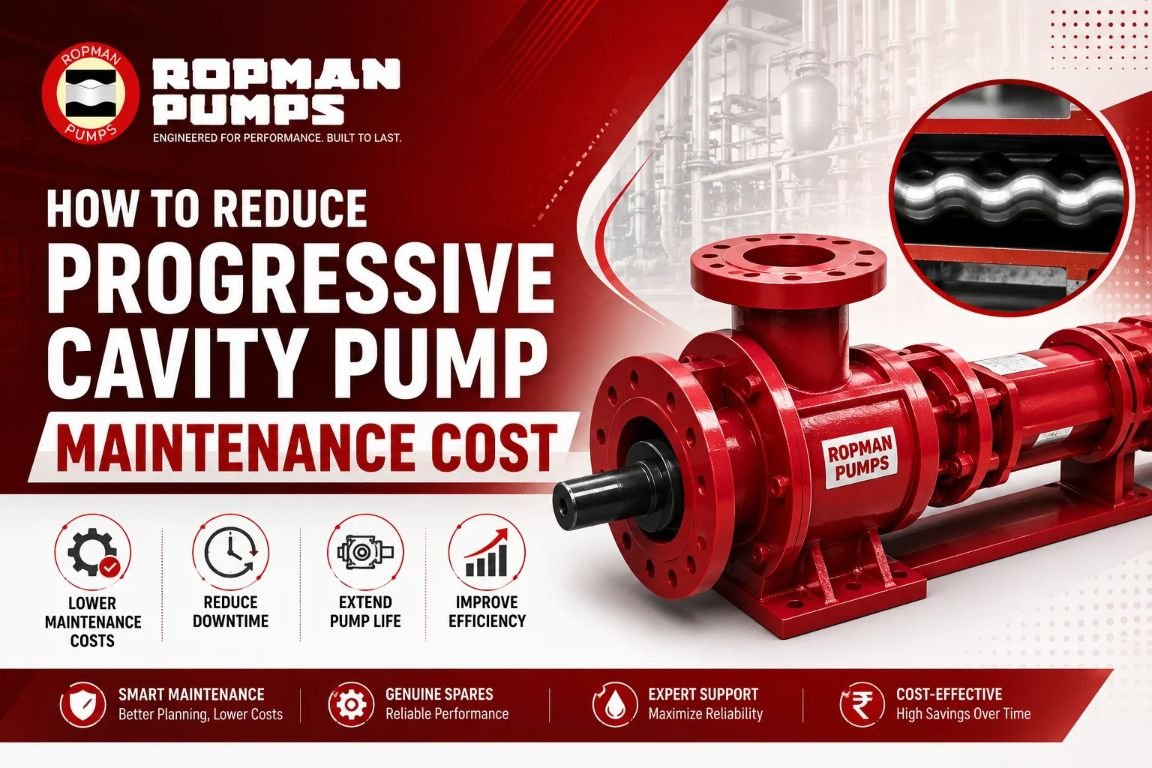
How to Reduce Progressive Cavity Pump Maintenance Cost
Seven practical, field-proven ways to cut wear, extend stator life, and slash downtime on your PC pumps.
Quick Answer
To reduce progressive cavity pump maintenance cost, tackle the real cost drivers: fit dry-run protection, run the pump slower with a VFD, match the stator elastomer to your fluid, keep rotors and stators as stocked spares, and follow a preventive service schedule. These steps cut premature wear, extend stator life, and turn sudden breakdowns into quick, planned swaps — the biggest saving of all.
Table of Contents
Progressive cavity pump maintenance is one of the biggest ongoing costs of owning a PC pump — but most of that cost is avoidable. When these pumps are looked after correctly, they run for years with minimal spend; when they are not, the same pump can drain your budget in stators, rotors, and lost production.
The good news is that the cost drivers are well understood, and a handful of simple habits make a dramatic difference. This guide breaks down exactly what runs up your bill and gives you seven proven ways to reduce it. For the underlying mechanism, see this overview of the progressing cavity pump.
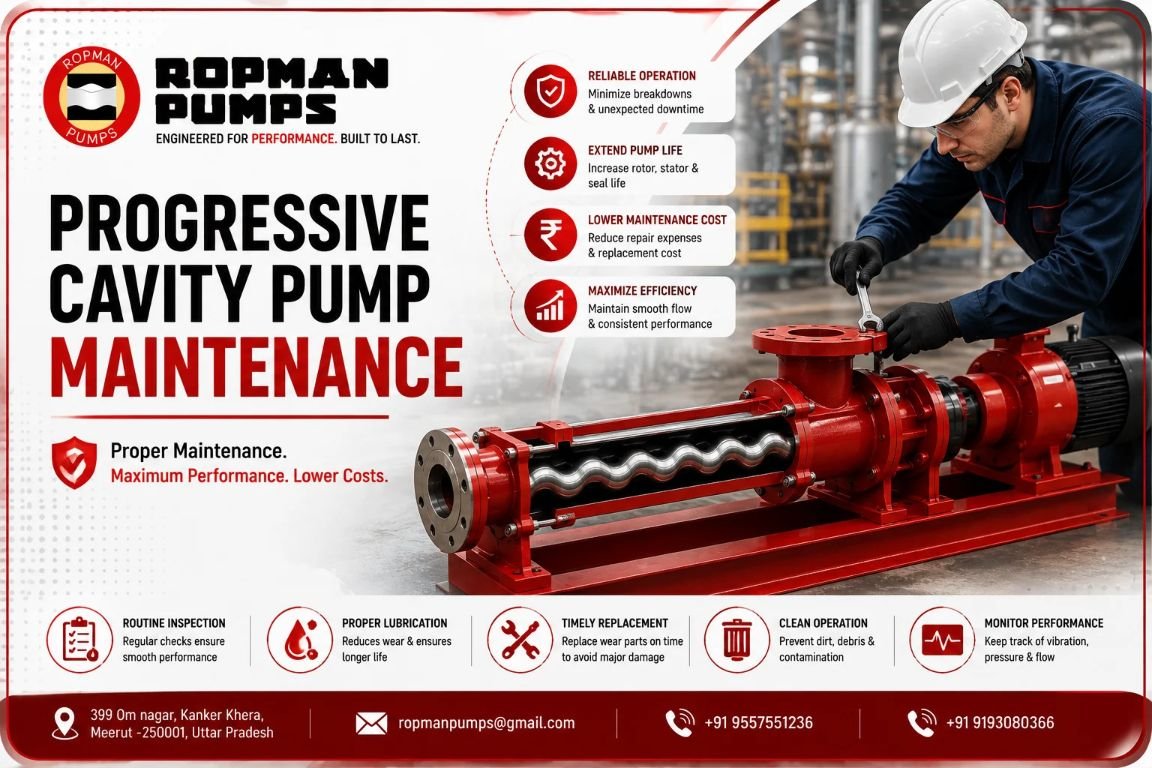
What Drives Progressive Cavity Pump Maintenance Cost
Before you can cut the bill, you need to know where it comes from. Almost all progressive cavity pump maintenance cost traces back to a small number of causes — and nearly every one is preventable.
- Stator and rotor wear — the main wear parts, worn out faster by abrasion and heat.
- Dry running — even a few minutes without fluid can destroy a stator.
- Wrong elastomer — chemical or thermal attack cracks the stator early.
- Running too fast — high speed on abrasive duty multiplies wear.
- Unplanned downtime — an emergency breakdown costs far more than a planned service.
- Slow spare supply — waiting weeks for parts turns a small fault into lost production.
The single largest hidden cost is not the spare part — it is the production lost while a pump sits waiting for it.
7 Ways to Reduce Progressive Cavity Pump Maintenance Cost
These seven steps target the cost drivers directly. Applied together, they transform progressive cavity pump maintenance from a recurring headache into a predictable, low line-item.
1. Fit Dry-Run Protection
Dry running is the fastest way to destroy a stator. A simple dry-run protection sensor stops the pump before friction heat wrecks the elastomer — the cheapest insurance in progressive cavity pump maintenance.
2. Run Big and Slow with a VFD
Oversize the pump and reduce its speed with a variable frequency drive. Lower running speed on abrasive duty dramatically extends rotor and stator life and cuts energy use at the same time.
3. Match the Stator Elastomer to the Fluid
Using the wrong rubber grade is one of the most common — and most expensive — mistakes. Matching the elastomer to the fluid’s chemistry and temperature prevents early swelling, hardening, and cracking.
4. Keep Rotors and Stators as Stocked Spares
A stocked rotor and stator turns a season-threatening breakdown into an afternoon’s work. Shelf spares are central to low-cost progressive cavity pump maintenance because they eliminate long production stoppages.
5. Monitor Flow and Pressure
A gradual drop in flow or pressure is the earliest sign of stator wear. Watching these trends lets you plan a replacement before a full failure, avoiding emergency call-outs.
6. Protect the Pump from Abrasives
Where possible, screen out grit and sand before the pump. Reducing abrasion is one of the most effective ways to lengthen wear-part life and lower long-term cost.
7. Follow a Preventive Service Schedule
Planned preventive maintenance always beats waiting for failure. A simple, regular schedule catches small problems while they are still cheap to fix.
Reactive vs Preventive Maintenance
The choice between fixing pumps when they break and servicing them on a schedule is the biggest factor in your total progressive cavity pump maintenance cost.
| Factor | Reactive (Breakdown) | Preventive (Planned) |
|---|---|---|
| Downtime | Sudden, long, unplanned | Short, scheduled |
| Spare supply | Rushed, often delayed | Stocked in advance |
| Production loss | High | Minimal |
| Total cost | Much higher | Much lower |
| Pump life | Shortened | Extended |
The message is simple: a small, planned spend on preventive care avoids a large, unplanned spend on emergency repair and lost output.
Preventive Maintenance Checklist
Use this checklist as the backbone of your progressive cavity pump maintenance routine. It catches the issues that cause the most expensive failures.
Regular progressive cavity pump maintenance checks:
- Check flow and pressure trends for signs of stator wear.
- Inspect the stator and rotor at scheduled intervals.
- Confirm dry-run protection is working.
- Check shaft seals for leaks.
- Verify the pressure relief valve is functional.
- Listen and feel for unusual noise, vibration, or heat.
- Keep a log so wear patterns become predictable.
Why In-House Spares Cut Progressive Cavity Pump Maintenance Cost
Even the best schedule fails if spares take weeks to arrive. When rotors and stators are made in-house, replacements are correctly matched and available fast — which is where the biggest maintenance savings really come from.
At Ropman Engineering Corporation, rotors and stators are manufactured in-house in Meerut, India. That means correctly sized spares delivered quickly, so your pumps spend less time waiting and more time running. Explore our full progressive cavity pump range and pair it with the right dosing pumps for your process.
Frequently Asked Questions
How can I reduce progressive cavity pump maintenance cost?
What is the most expensive part of PC pump maintenance?
How often should a progressive cavity pump be serviced?
What causes a stator to wear out quickly?
Does running a pump slower really save money?
Conclusion
Progressive cavity pump maintenance does not have to be a runaway cost. Almost every rupee you spend traces back to wear and downtime — and both are largely preventable with dry-run protection, slower running, correct elastomers, stocked spares, and a simple preventive schedule.
Get these habits in place, and your progressive cavity pump maintenance becomes predictable, planned, and far cheaper — while your pumps run longer and more reliably.
Cut Your Pump Maintenance Costs with Ropman
In-house rotors and stators mean fast, correctly-matched spares and less downtime. Tell us your pump and fluid, and we will help you build a low-cost maintenance plan.
Talk to Our Engineers