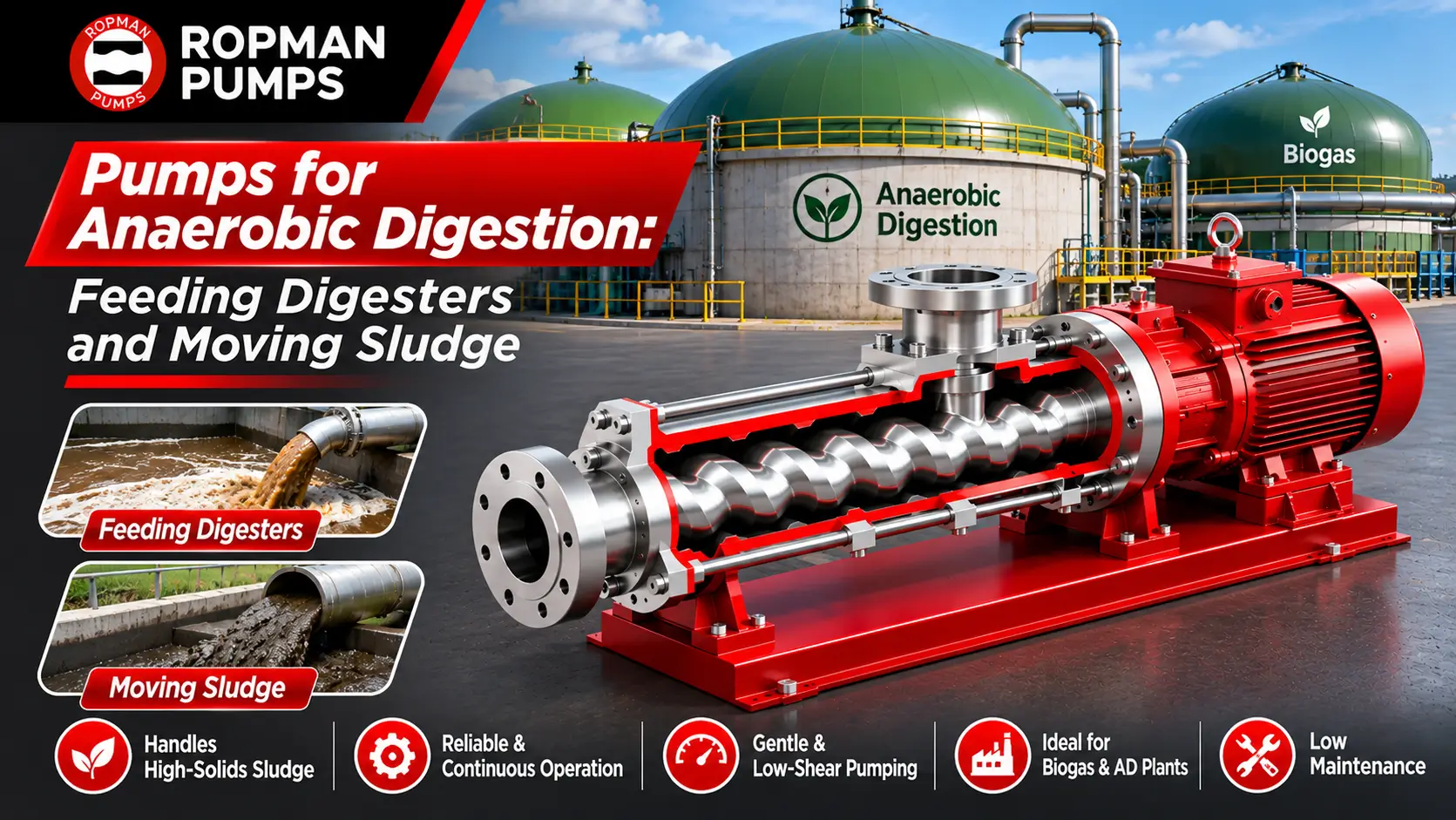
Pumps for anaerobic digestion have one of the toughest jobs in a biogas plant. They move thick, fibrous, gritty feedstock into the digester, circulate it inside, and carry the digestate out, often around the clock. A pump that clogs or wears out stops gas production. This guide explains the pump types used and how to select them.
Where Pumps for Anaerobic Digestion Are Needed
In a typical anaerobic digestion plant, pumps do five separate jobs:
- Feedstock transfer. Moving cow dung slurry, food waste, sludge or crop residue from the mixing tank to the digester.
- Digester feeding. Dosing a steady load, since sudden changes upset the biology.
- Recirculation and mixing. Keeping the digester content moving and temperatures even.
- Digestate removal. Pumping the digested material to storage or separation.
- Sludge and condensate handling. Smaller duties that still need reliable pumps.
Why Anaerobic Digestion Is Hard on Pumps
- High solids. Slurry with a high dry-matter content is thick and sticky.
- Fibres and straw. These wrap around impellers and block passages.
- Grit and sand. Abrasive material wears rotors and housings.
- Corrosive gas. Hydrogen sulphide attacks some metals and seals.
- Changing viscosity. Feedstock mixes vary day to day.
Best Pump Types for Biogas Digesters
Progressive cavity pumps
The most common choice for digester feeding. A progressive cavity pump handles high solids, delivers steady metered flow and runs at low speed, which protects against abrasion. Read about the biogas pump and the reasons biogas transfer pumps are important.
Hopper-fed pumps for solid feed
For stacked or semi-solid feed, a hopper with a feed screw pushes material into the rotor. The hopper type PC pump is built for this kind of material.
Lobe and chopper pumps
Lobe pumps work well for thinner, cleaner digestate. Chopper pumps cut fibres before they block the line, so they suit mixing and recirculation duties. Neither matches a progressive cavity pump for accurate dosing.
Centrifugal pumps
Only for thin, low-solids liquid such as clarified water. For thick slurry they clog and lose efficiency. See screw pump vs centrifugal pump for why.
Comparison: Pumps for Anaerobic Digestion
| Pump | Best for | Watch out for |
|---|---|---|
| Progressive cavity | Feeding, dosing, thick slurry | No dry running |
| Hopper progressive cavity | Stackable, semi-solid feed | Needs a proper hopper design |
| Lobe | Digestate transfer | Abrasion on lobes |
| Chopper | Fibrous recirculation | Wear on cutters |
| Centrifugal | Thin liquids only | Clogging on solids |
How to Select the Right Pump
- Know your total solids and fibre content, not just the feedstock name.
- Decide the feed rate you need, in kg or m³ per hour.
- Check pressure, including pipe length to the digester.
- Choose materials that resist hydrogen sulphide and abrasion.
- Fit dry-run and pressure protection.
Correct selection also limits maintenance. Our tips on reducing progressive cavity pump maintenance cost apply directly to biogas plants.
FAQs: Pumps for Anaerobic Digestion
Which pump is best for feeding a biogas digester?
A progressive cavity pump, because it handles solids and delivers steady, controllable flow.
How do you stop fibres from blocking pumps?
Use wide-passage pumps, pre-chopping or screening, and low-speed positive displacement designs.
Do biogas pumps need special materials?
Often yes. Hydrogen sulphide and wet conditions attack some metals and elastomers, so choose materials that match the gas and slurry.
Plan Your Biogas Pumping with Ropman Pumps
Send us your feedstock, solids percentage and flow requirement. Our engineers will recommend a suitable pump from the product range. Contact us to get started.
Key Takeaway on Pumps for anaerobic digestion
Use this guide on pumps for anaerobic digestion as a checklist before you request a quote. If your team is still unsure about pumps for anaerobic digestion, share your fluid data with our engineers. Keep notes on pumps for anaerobic digestion for every pump you install, so the next selection is faster.