
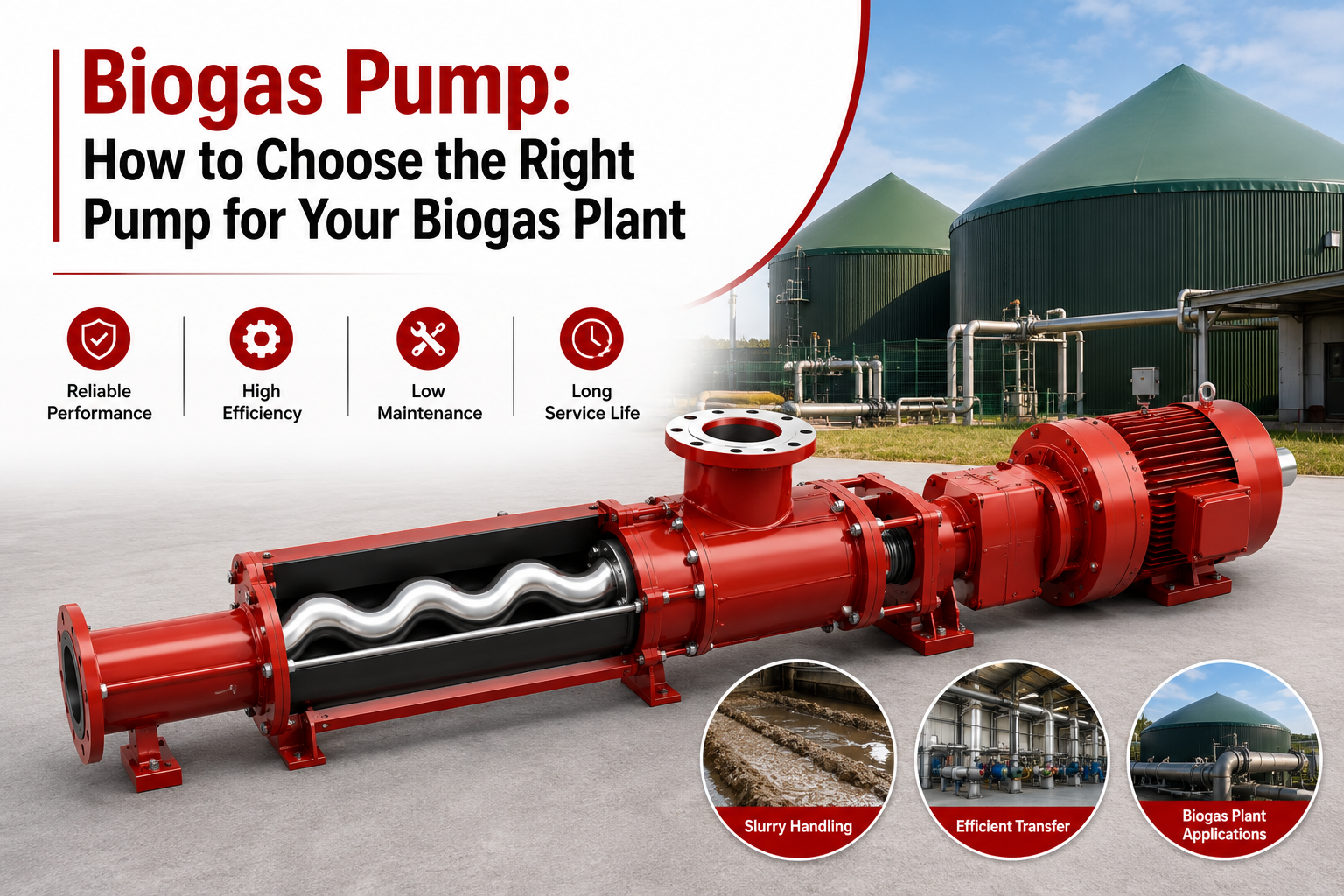
Biogas Pump: How to Choose the Right Pump for Your Biogas Plant
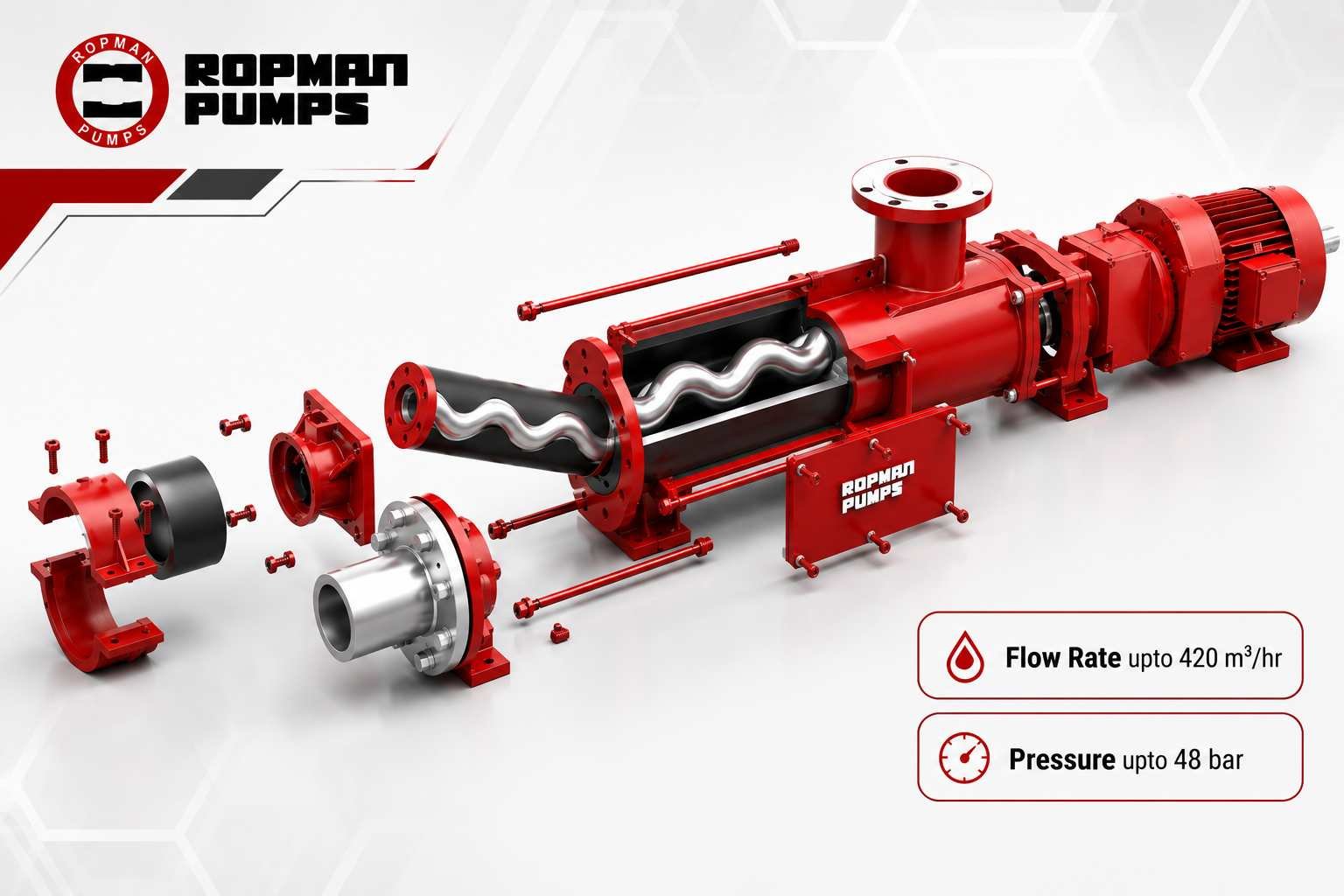
A biogas pump is a progressive cavity (single screw) pump built to move the thick, fibrous, solids-laden slurry that flows through every stage of a biogas plant — from feeding bio-waste into the digester to recirculating sludge and transferring digestate. Get this pump right and the plant runs quietly for years; get it wrong and you fight blockages, worn stators, and unplanned downtime every week.
This guide explains what a biogas pump does, the pump types used at each stage of anaerobic digestion, the specifications that actually matter, and how to choose one that lasts. It is written for plant operators, EPC contractors, and biogas developers who need the decision made correctly the first time.
- A biogas pump is almost always a progressive cavity pump — it handles high-viscosity, fibrous slurry that centrifugal pumps cannot.
- Different stages need different pumps: feed, recirculation, digestate transfer, and manure filling.
- Solids content, fibre length, and dry-matter percentage decide the pump design, not just the flow rate.
- Wide-throat and hopper designs prevent bridging with thick substrate.
- Stator elastomer choice and slow running speed are the biggest levers on service life.
What Is a Biogas Pump?
A biogas pump is a positive displacement pump used to transfer organic slurry and digestate inside a biogas or anaerobic digestion plant. Because the fluid is viscous, abrasive, and packed with solids and fibre, the progressive cavity (eccentric single screw) design is the industry standard — it moves the material gently, at a steady flow, without shredding it or clogging.
Unlike a centrifugal pump, which stalls the moment a fluid gets thick, a biogas pump seals better as viscosity rises. That single property is why it dominates the sector. It pumps macerated food waste, cow-dung slurry, press cake, pasteurised biomass, and finished digestate with the same steady behaviour. As the US EPA AgSTAR programme notes, this digestate is discharged continuously from the reactor — and it is the pump that keeps it moving.
Why a Biogas Pump Must Be a Progressive Cavity Pump
Biogas substrate is one of the hardest fluids in industry: variable, fibrous, gritty, and often 8–12% dry solids or higher. Only a positive displacement design copes reliably. Here is why the progressive cavity biogas pump wins:
- Handles high viscosity and solids without loss of flow.
- Gentle, low-shear action keeps the biology intact for better gas yield.
- Steady, non-pulsating flow for accurate feeding and recirculation.
- Flow proportional to speed — easy control with a VFD.
- Self-priming and able to run in both directions for line clearing.
Biogas Pump Types for Each Stage of Production
A modern biogas plant does not use one pump — it uses a family of them, each tuned to a stage of the process. Choosing the correct biogas pump for each duty is what keeps the plant running.
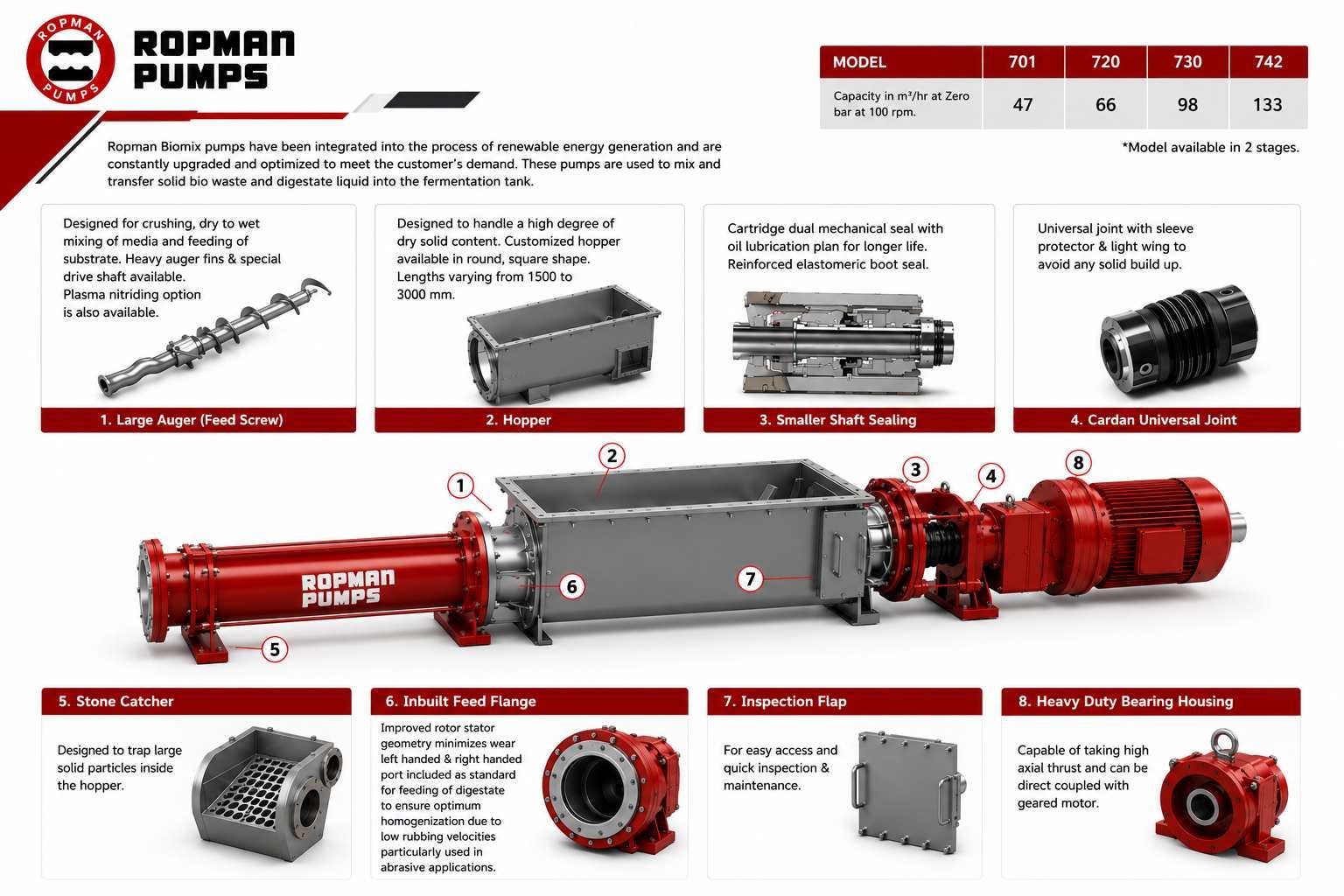
1. Bio-Mix / Feed Pump
Mixes macerated bio-waste with digestate liquid and feeds the blended slurry into the fermentation tank. A wide-throat or hopper inlet stops thick substrate from bridging at the suction.
2. Recirculation Pump
Circulates the fermentation-tank slurry through heat exchangers to hold the digester at the right temperature, keeping anaerobic bacteria active and gas production steady.
3. Digestate Transfer Pump
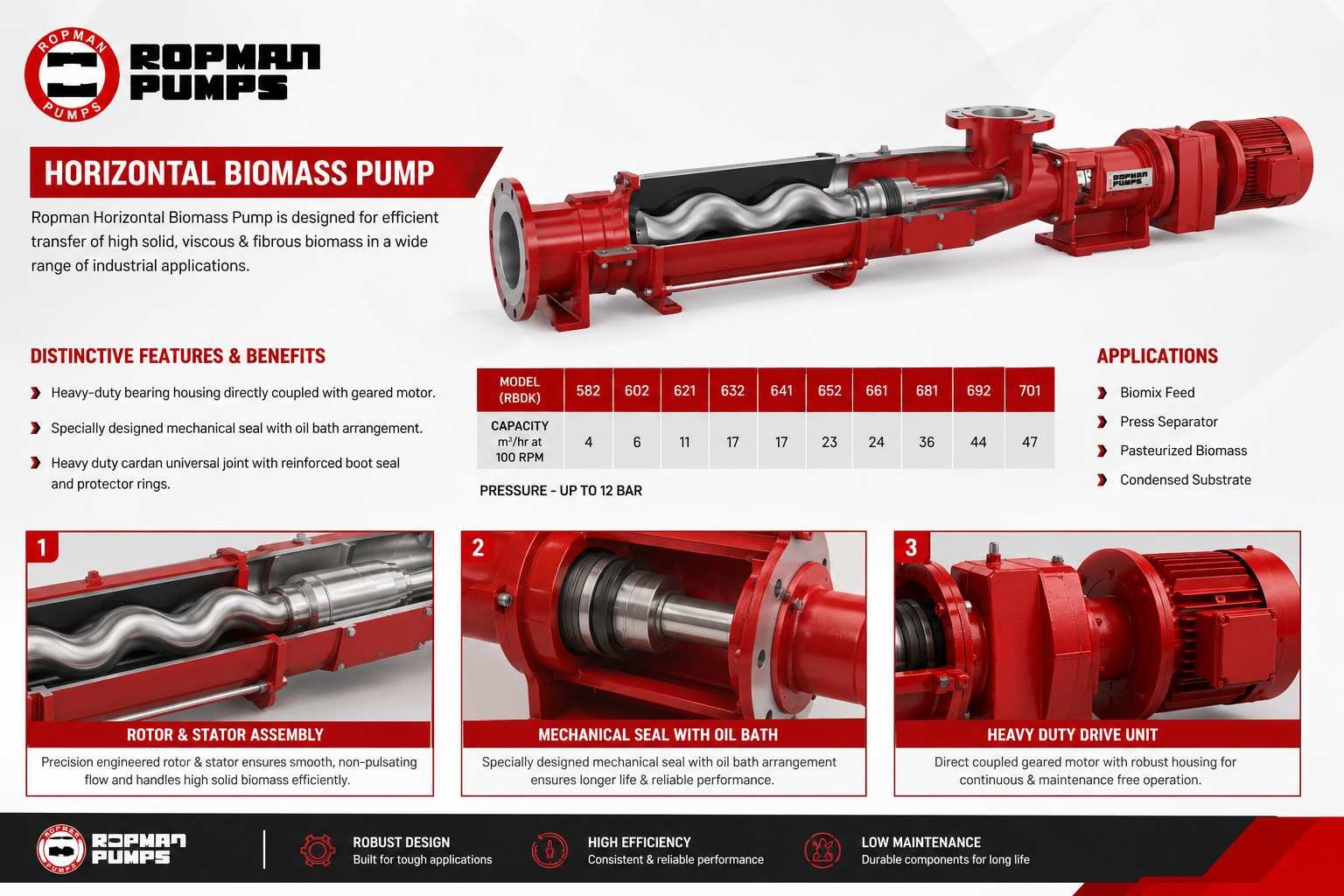
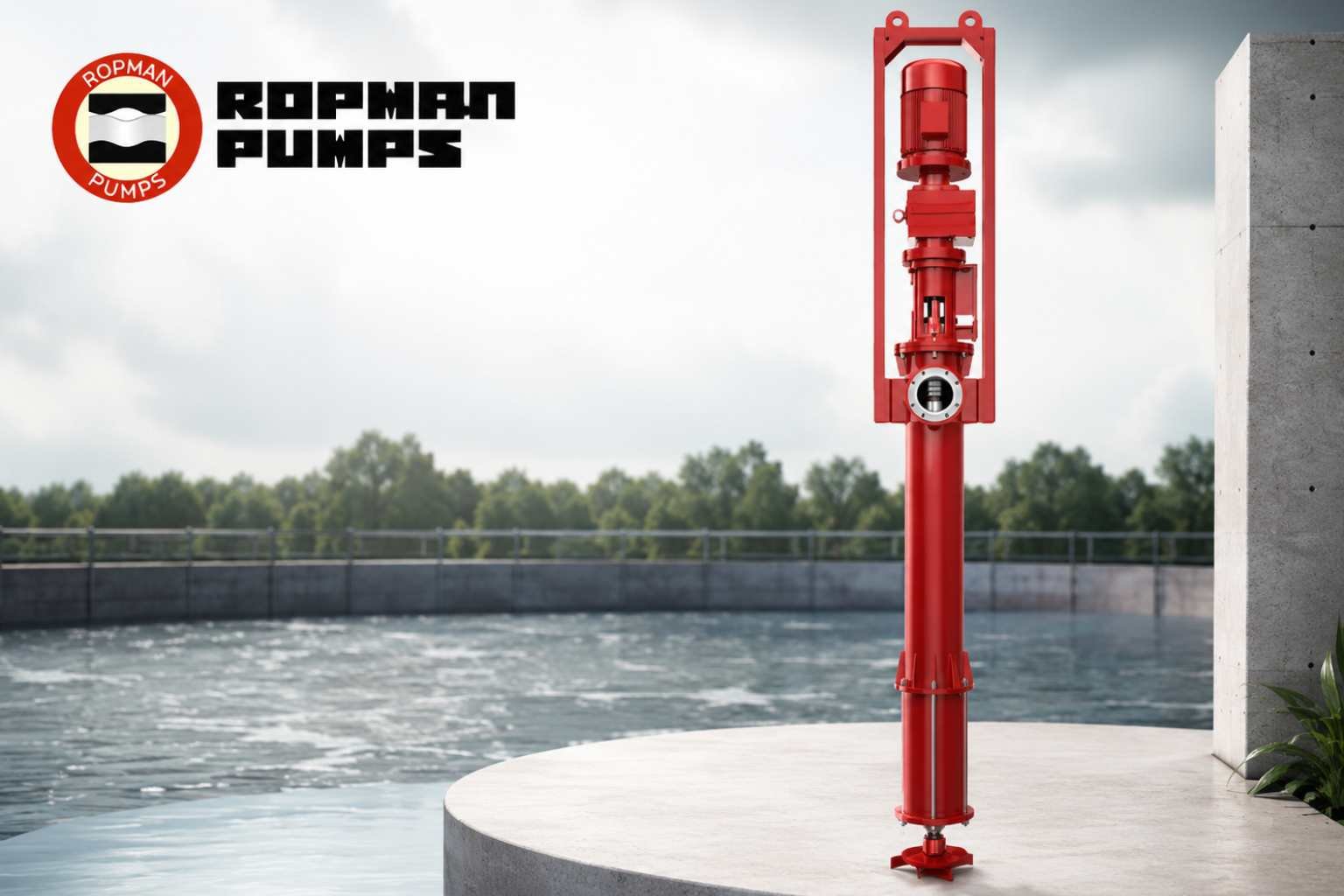
Moves finished digestate from the fermenter to open lagoons or storage tanks. A horizontal or vertical biomass biogas pump handles this high-volume duty.
4. Manure / Tanker Filling Pump
Loads the organic manure by-product from storage into tankers for use as fertiliser — the final, revenue-generating step of the cycle.
Biogas Pump Specifications at a Glance
| Duty | Typical Flow | Pressure | Substrate |
|---|---|---|---|
| Bio-mix / feed | Up to 250 m³/hr | Up to 12 bar | Macerated bio-waste + digestate |
| Recirculation | Up to 250 m³/hr | Up to 12 bar | Fermenting slurry |
| Digestate transfer | Up to 250 m³/hr | Up to 12 bar | Digestate, cow-dung slurry, liquid manure |
| Manure filling | Application specific | Application specific | Organic manure |
← Swipe the table sideways to see all columns
How the Biogas Production Process Uses Pumps
Biogas is produced by anaerobic digestion — micro-organisms breaking down organic matter in an oxygen-free tank to release methane-rich gas. Pumps move the material at every step:
How to Choose the Right Biogas Pump
Most biogas pump failures are specification errors, not manufacturing faults. Nail these five points and the pump will last.
- Dry-solids percentage & fibre length — this drives whether you need a standard or wide-throat inlet.
- Real flow and pressure at operating temperature, not the clean-water figure.
- Abrasiveness (grit, sand from feedstock) — this decides rotor coating and stator hardness.
- Stator elastomer — NBR, EPDM, or HNBR depending on temperature and chemistry.
- Serviceability — a quick-maintenance design saves hours every stator change.
4 Habits That Extend Biogas Pump Life
Biogas Pumps Built for Indian Plants
Ropman Engineering Corporation manufactures progressive cavity biogas pumps, hopper & wide-throat feed pumps, and digestate transfer pumps — with rotors and stators produced in-house for fast spares and long service life. Tell us your substrate and dry-solids percentage, and we will size the right pump for your plant.
Request a Quote →Frequently Asked Questions
What is a biogas pump used for?
A biogas pump transfers organic slurry and digestate through a biogas plant — feeding bio-waste into the digester, recirculating slurry through heat exchangers, moving finished digestate to storage, and filling organic manure into tankers.
Which pump is best for a biogas plant?
A progressive cavity (single screw) pump is best for a biogas plant because it handles high-viscosity, fibrous, solids-laden slurry with gentle, steady flow that centrifugal pumps cannot manage.
Why can’t a centrifugal pump be used for biogas slurry?
Centrifugal pumps lose efficiency and clog as fluid thickens or carries solids. Biogas substrate is viscous and fibrous, so a positive displacement biogas pump is required instead.
What flow and pressure do biogas pumps deliver?
Typical biomass biogas pumps deliver flow up to around 250 m³/hr at pressures up to about 12 bar, though exact figures depend on substrate and plant size.
How do I make a biogas pump last longer?
Run it slower with a VFD, select the correct stator elastomer, fit dry-run protection, use a quick-service design, and keep a spare rotor and stator on hand.
- Progressive Cavity Pumps — full range
- Wastewater & Effluent Pumping Solutions
- Contact Ropman — get a pump sized for your plant
↑ Replace these with your exact live URLs before publishing.