

How to Choose a Pump for High-Viscosity Fluids: A Practical Engineer’s Guide
Choosing a pump for high-viscosity fluids is less about picking a product and more about correctly reading the fluid. Molasses, sludge, adhesives, and heavy crude do not behave like water — they thicken in the cold, thin under shear, and punish any pump that was sized on optimistic data. Get the fluid analysis right and the selection almost makes itself; get it wrong and you buy months of clogging, wear, and downtime.
This guide walks through the real decision an engineer faces: how to measure viscosity properly, why temperature and shear change everything, and a step-by-step path to the right pump for high-viscosity fluids. It is written to help you specify correctly the first time, not to sell you the first pump on a list.
- Viscosity is the master variable when selecting a pump for high-viscosity fluids — but it must be measured at operating temperature.
- Temperature changes viscosity dramatically; pressure barely affects it at all.
- Many thick fluids are shear-thinning, so the number on the datasheet may not be the number in the pipe.
- Progressive cavity pumps handle the widest viscosity range with gentle, non-pulsating flow.
- Run big and slow: oversize the pump, then reduce speed to fill the cavities and cut wear.
Why High-Viscosity Fluids Break Ordinary Pumps
Before choosing a pump for high-viscosity fluids, it helps to understand exactly why thick media defeat conventional equipment. A centrifugal pump relies on flinging fluid outward at speed; the thicker the fluid, the more energy is wasted churning and the less actually moves. Efficiency falls off a cliff, and any solids or fibre simply clog the impeller.
Thick fluids create four compounding problems at once:
- High flow resistance that ordinary pumps cannot overcome without stalling.
- Poor cavity filling — the fluid is too slow to fill the pump before the next cycle.
- Abrasion from grit and solids that ride along in many viscous media.
- Shear sensitivity in products where aggressive pumping destroys the material itself.
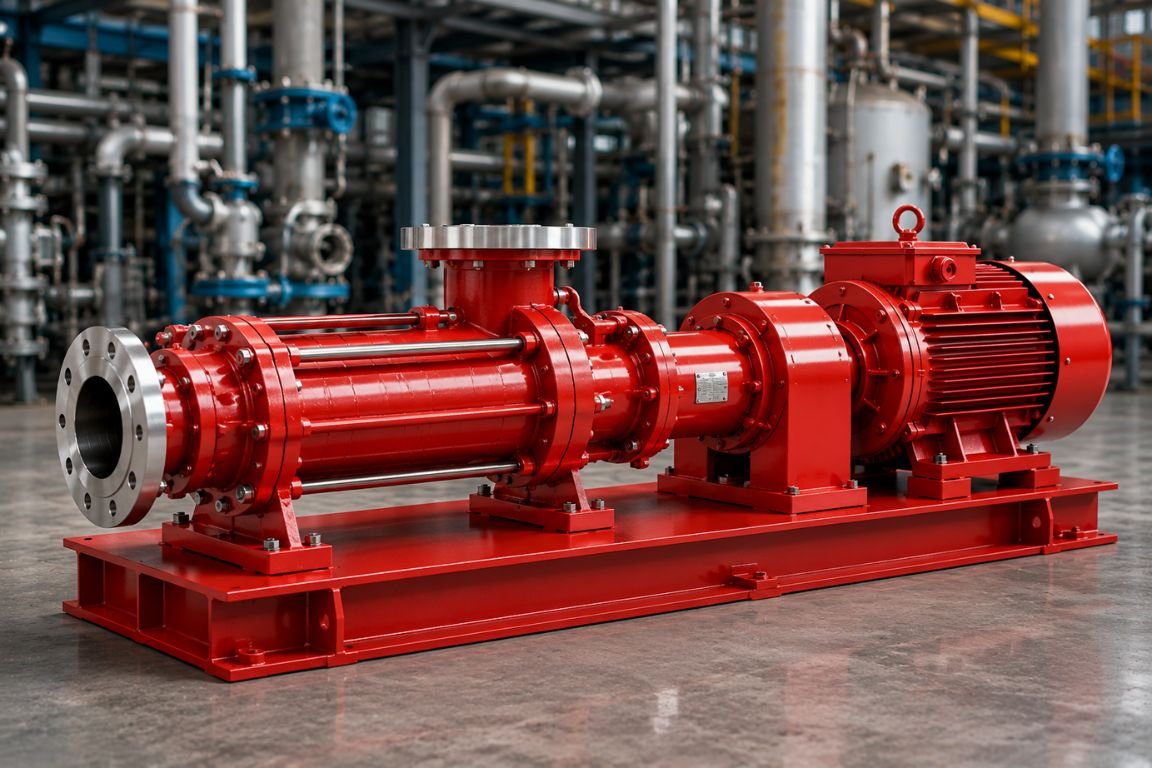
Viscosity, Decoded: The One Number That Drives Everything
Viscosity is a fluid’s internal resistance to flow — the reason honey pours slower than water. It is measured in centipoise (cP), and the range across industrial fluids is enormous. Seeing that range laid out makes the sizing challenge obvious.
Indicative values — real viscosity depends heavily on temperature and shear.
The Two Traps That Wreck Pump Selection
Most badly-sized pumps for high-viscosity fluids fail because of two properties that catalogue selection ignores. Understand these and you avoid the majority of mistakes.
Trap 1: Temperature Changes Everything
Viscosity is extremely sensitive to temperature and almost completely insensitive to pressure. The same molasses that flows at 45°C can become a near-solid at 15°C on a cold morning. If you size the pump on a warm-day sample and the plant runs in winter, the pump will struggle and the motor may trip. Always specify viscosity at the actual operating temperature — and at the coldest realistic temperature the fluid will see.
Trap 2: Shear-Thinning Fluids Lie to You
Many thick fluids are non-Newtonian. Thixotropic (shear-thinning) media like molasses, paint, and glue become thinner as they are agitated or pumped, while dilatant (shear-thickening) media like some clay slurries do the opposite. This means the static viscosity you measure in a beaker may be far higher than the viscosity inside a moving pipe. Sizing on static viscosity alone can lead to a wildly oversized — or undersized — pump. Where it matters, ask for shear-rate testing rather than a single beaker figure.
⚠️ The golden rule: never size a pump for high-viscosity fluids on a single room-temperature viscosity number. Get viscosity across the real temperature range, and understand how the fluid behaves under shear.
The Best Pump for High-Viscosity Fluids: Progressive Cavity
Across the viscous range, one design keeps coming out on top: the progressive cavity pump. As a positive displacement pump, it moves a fixed volume of fluid in sealed cavities from suction to discharge, which gives it structural advantages that thick fluids reward rather than punish:
- Efficiency rises with viscosity. Thick media seal the internal clearances, so molasses actually pumps better than thin liquid.
- Smooth, non-pulsating flow that protects shear-sensitive products and suits accurate dosing.
- Handles solids and fibre without clogging, unlike impeller pumps.
- Flow proportional to speed — a VFD gives precise control across changing conditions.
- Self-priming and able to run in reverse to clear a blocked line.
- This combination makes it the default pump for high-viscosity fluids in most plants.
6-Step Framework to Choose a Pump for High-Viscosity Fluids
Use this sequence to select the correct pump for high-viscosity fluids without guesswork. Each step feeds the next, and together they turn a risky purchase into a confident one.
Matching the Right Pump for High-Viscosity Fluids to Your Media
| Fluid Example | Key Challenge | Recommended Setup |
|---|---|---|
| Molasses | Cold-weather thickening | PC pump + heat tracing, run slow |
| Sludge / dewatered cake | High solids, bridging | Wide-throat or hopper PC pump |
| Adhesives / resins | Shear sensitivity | Low-speed PC pump, gentle handling |
| Heavy crude / drilling mud | Abrasion + viscosity | Hardened rotor, tough stator |
| Fruit paste / syrup | Product integrity, hygiene | Food-grade PC pump, low shear |
← Swipe the table sideways to see all columns
Industries That Depend on Viscous-Fluid Pumping
Not Sure Which Pump Suits Your Fluid?
Ropman Engineering Corporation manufactures progressive cavity pumps, wide-throat and hopper pumps, food-grade units, and dosing pumps for high-viscosity duties across India — with rotors and stators produced in-house. Share your fluid, its viscosity at operating temperature, and solids content, and we will size the right pump for high-viscosity fluids the first time.
Talk to Our Engineers →Frequently Asked Questions
Which pump is best for high-viscosity fluids?
A progressive cavity (single screw) pump is generally best for high-viscosity fluids. As a positive displacement pump it moves thick, sticky, and abrasive media in sealed cavities with smooth, non-pulsating flow, and its efficiency actually improves as viscosity rises.
Why can’t a centrifugal pump handle viscous fluids?
A centrifugal pump moves fluid by accelerating it with an impeller. As viscosity rises, most of that energy is wasted churning the fluid, efficiency collapses, and any solids clog the impeller — so it is unsuitable for thick media.
Does temperature affect pump selection for viscous fluids?
Yes, significantly. Viscosity changes sharply with temperature while pressure barely affects it. Always size a pump for high-viscosity fluids using viscosity at the actual operating temperature, including the coldest condition the fluid will experience.
What is shear-thinning and why does it matter?
Shear-thinning (thixotropic) fluids like molasses and paint become less viscous when agitated or pumped. The static viscosity measured in a beaker can be much higher than the viscosity inside the pump, so shear behaviour must be considered during sizing.
Should a viscous-fluid pump run fast or slow?
Slow. Thick fluids need time to fill the pump cavities, so a larger pump running at lower speed moves viscous media more reliably and wears far less. A variable frequency drive is the usual way to control this.
- Progressive Cavity Pumps — full product range
- Dosing Pumps for accurate viscous-fluid metering
- Contact Ropman — get your fluid analysed and pump sized
↑ Replace these with your exact live URLs before publishing.
Background reference: viscosity explained.